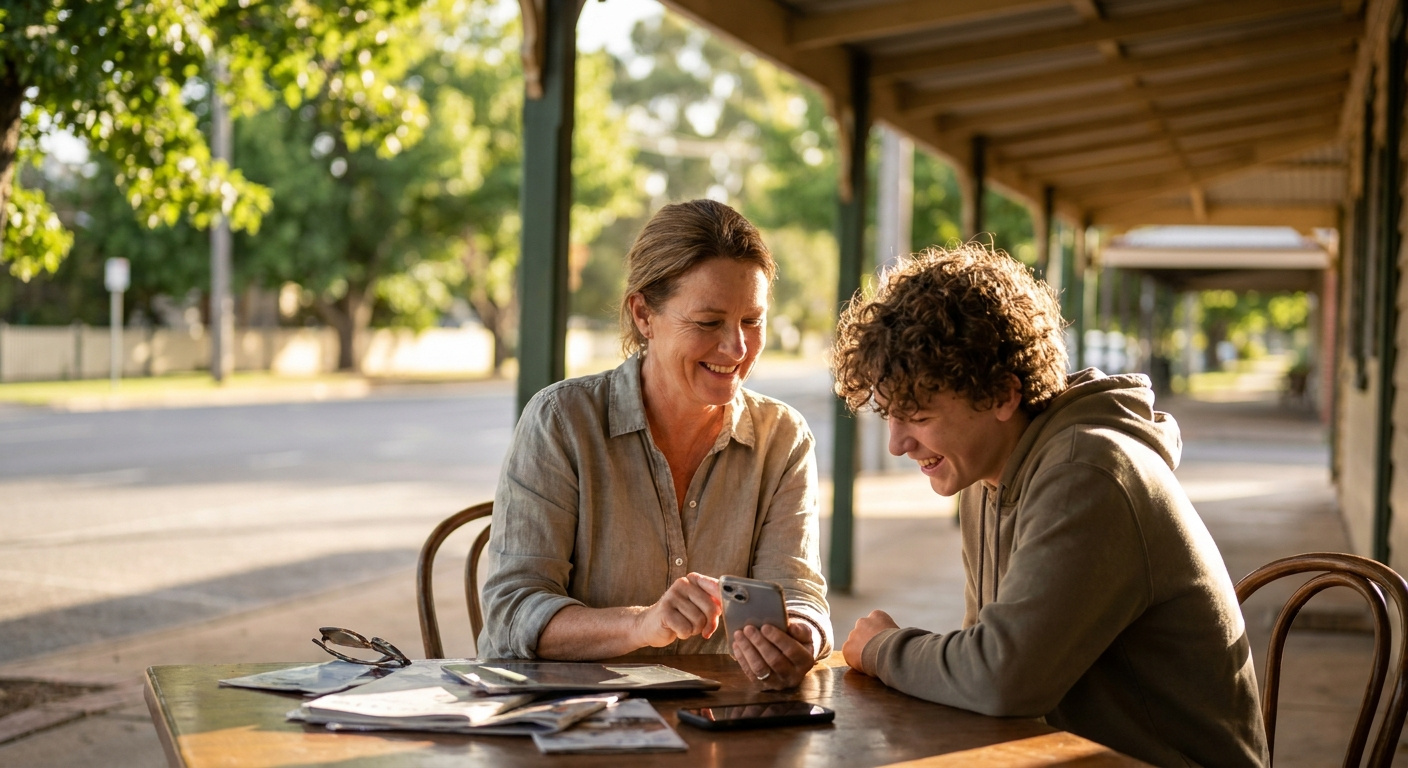

Fifteen-year-old Sophie from Brisbane checks Instagram twice daily, scrolls TikTok for twenty minutes after school, and messages friends on Snapchat most evenings. Her mum Emma used to worry constantly about screen time limits.
Turns out Sophie might have struck the perfect balance.
Groundbreaking research from the Adelaide Universitytute published this year challenges the widespread belief that less social media always equals better mental health for teenagers. The Melbourne-based study tracking 2,400 Australian adolescents over eighteen months found something unexpected: teens using social platforms moderately showed significantly better emotional regulation and peer connection than those avoiding them entirely.
"We discovered a clear sweet spot," explains lead researcher Dr Sarah Chen from MCRI's Digital Wellness Lab. "Adolescents engaging with social media for one to two hours daily, with intentional breaks, demonstrated higher resilience scores and stronger friendship networks than their digitally abstinent peers."
The findings flip conventional wisdom on its head. Previous Australian research, including Beyond Blue's 2019 youth mental health report, consistently linked heavy social media use to increased anxiety and depression. But this new data suggests the relationship isn't simply linear.
Teens in the moderate use category were more likely to maintain offline friendships, participate in extracurricular activities, and report feeling socially supported during difficult periods. They used platforms primarily for connection rather than passive consumption, actively engaging through comments, direct messages, and shared content creation.
But here's where it gets interesting (and where many Australian families are getting it wrong): the quality of engagement mattered far more than raw screen time numbers.
The study identified specific behaviours separating healthy users from problematic ones. Positive patterns included following accounts aligned with genuine interests, regular digital detox periods, and using social media to coordinate real-world activities. Concerning signs involved endless scrolling, comparison-driven browsing, and late-night usage disrupting sleep patterns.
The Raising Children Network, Australia's national parenting resource, has already updated their guidance based on these findings. Rather than advocating complete restriction, they now recommend collaborative family media plans focusing on purposeful usage.
"We're seeing more balanced conversations in our counselling sessions," reports Colleen Mahoney from Kids Helpline. "Parents are moving beyond blanket bans toward teaching critical digital literacy skills."
State education departments across Australia are taking notice. Victoria's Department of Education recently piloted a program teaching Year 8 students to audit their own social media habits, identifying which platforms and practices genuinely enhanced their wellbeing versus those triggering negative emotions.
The research also revealed concerning trends for teens at both extremes. Complete social media avoiders often struggled with peer isolation, particularly during COVID lockdowns when digital connection became essential for maintaining friendships. Meanwhile, heavy users (over four hours daily) showed classic signs of problematic engagement: sleep disruption, academic decline, and increased anxiety symptoms.
For parents navigating this complex landscape, the message isn't about finding a magic number of minutes. It's about fostering intentional, connected usage while maintaining strong offline foundations.
The sweet spot isn't just about time. It's about purpose, connection, and balance in an irreversibly digital world.