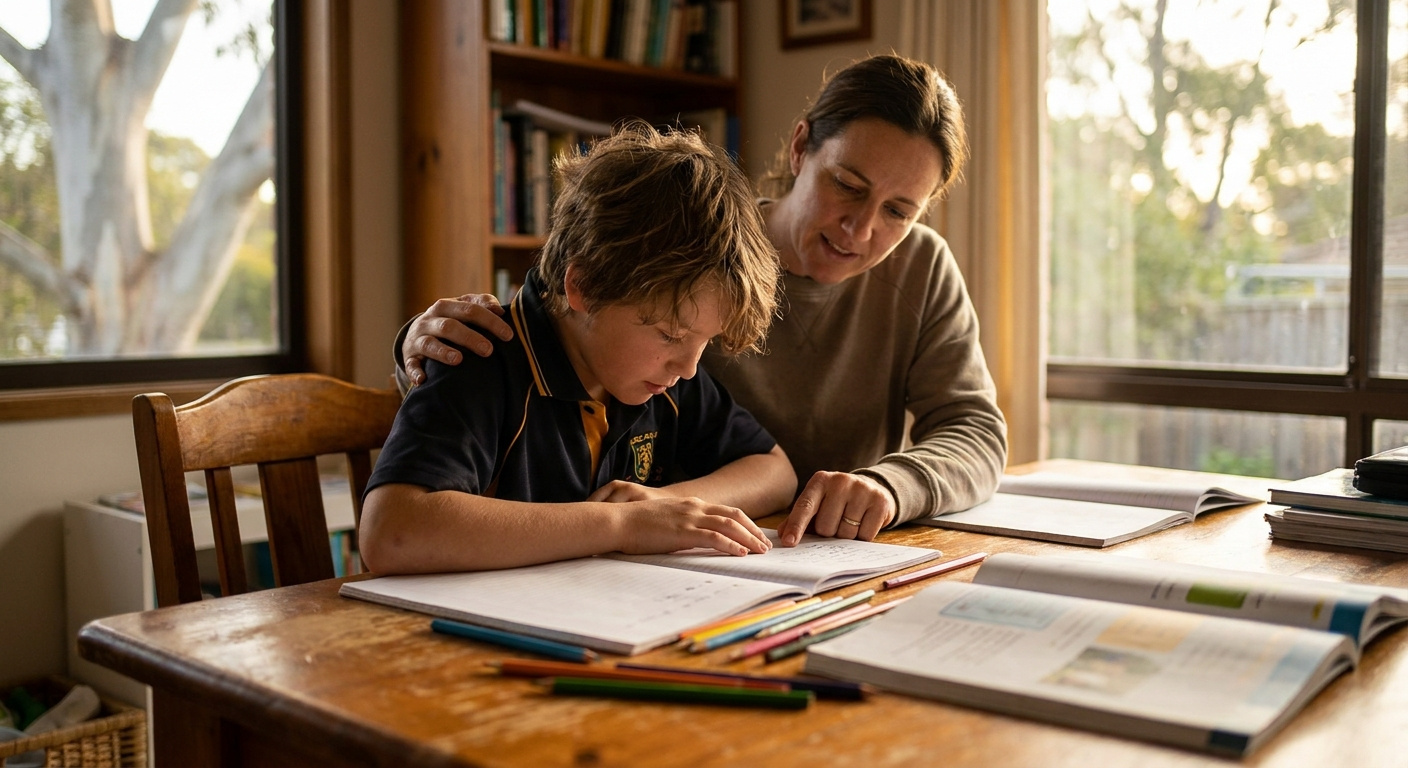
Sarah Chen stares at her laptop screen, calculator beside her, adding up the damage. Grade 7 orientation pack: $680. MacBook lease: $1,200. School shoes that'll last six months: $140. The Melbourne mother of two hasn't even started on camps, excursions, or the inevitable 'voluntary' building fund contribution.
The Australian Bureau of Statistics reported that Australian households spent $14.4 billion on education in 2022, marking a 23% increase from pre-pandemic levels. But behind that staggering figure lie families making impossible choices between mortgage payments and music lessons, between family holidays and school camps.
Public schools aren't immune. Despite being 'free', the average Australian state school family now contributes $1,200 annually in fees and levies, according to recent Australian Parents Council research. Private school families face bills exceeding $30,000 per child before extras.
Technology demands hit hardest. Schools increasingly require individual devices, with many mandating specific models or software packages that can't be substituted with cheaper alternatives. The Australian Competition and Consumer Commission noted in 2023 that education technology costs had risen 40% faster than general inflation over the previous five years.
What strikes me most after a decade in school counselling is how these financial pressures reshape family dynamics. Children internalise the stress, often declining opportunities before parents even say no. I've watched bright kids convince themselves they don't want to join the school play because the costume costs feel too burdensome.
The ripple effects extend beyond individual households. Research by the Australian Council of Educational Research published in 2023 found that families earning between $80,000 and $120,000 annually report the highest levels of education-related financial stress. They earn too much for government assistance but lack the comfortable margins of higher-income brackets.
Textbooks present another mounting challenge. Digital licensing means families can't pass books between siblings or buy secondhand copies. The Australian Booksellers Association reported that educational material costs increased by 35% between 2021 and 2023, outpacing wage growth significantly.
Some schools are responding innovatively. Penola Catholic College in Melbourne introduced a 'one fee' system covering all activities, excursions, and materials. Other institutions have established hardship funds or equipment lending libraries. But these remain exceptions rather than systematic solutions.
The federal government's education funding reviews consistently identify cost barriers as impediments to equity, yet meaningful relief remains elusive. State governments provide limited rebates, typically $150 to $400 annually, which barely dent modern education expenses.
Families are adapting through necessity rather than choice. Second jobs become standard. Extended families pool resources for major purchases like laptops or musical instruments. Community Facebook groups facilitate uniform swaps and textbook sharing.
But adaptation shouldn't be required for accessing quality education. When families sacrifice essentials to fund their children's learning, we've fundamentally misunderstood education's role in Australian society. The $14.4 billion question isn't whether families can afford these costs. It's whether they should have to.