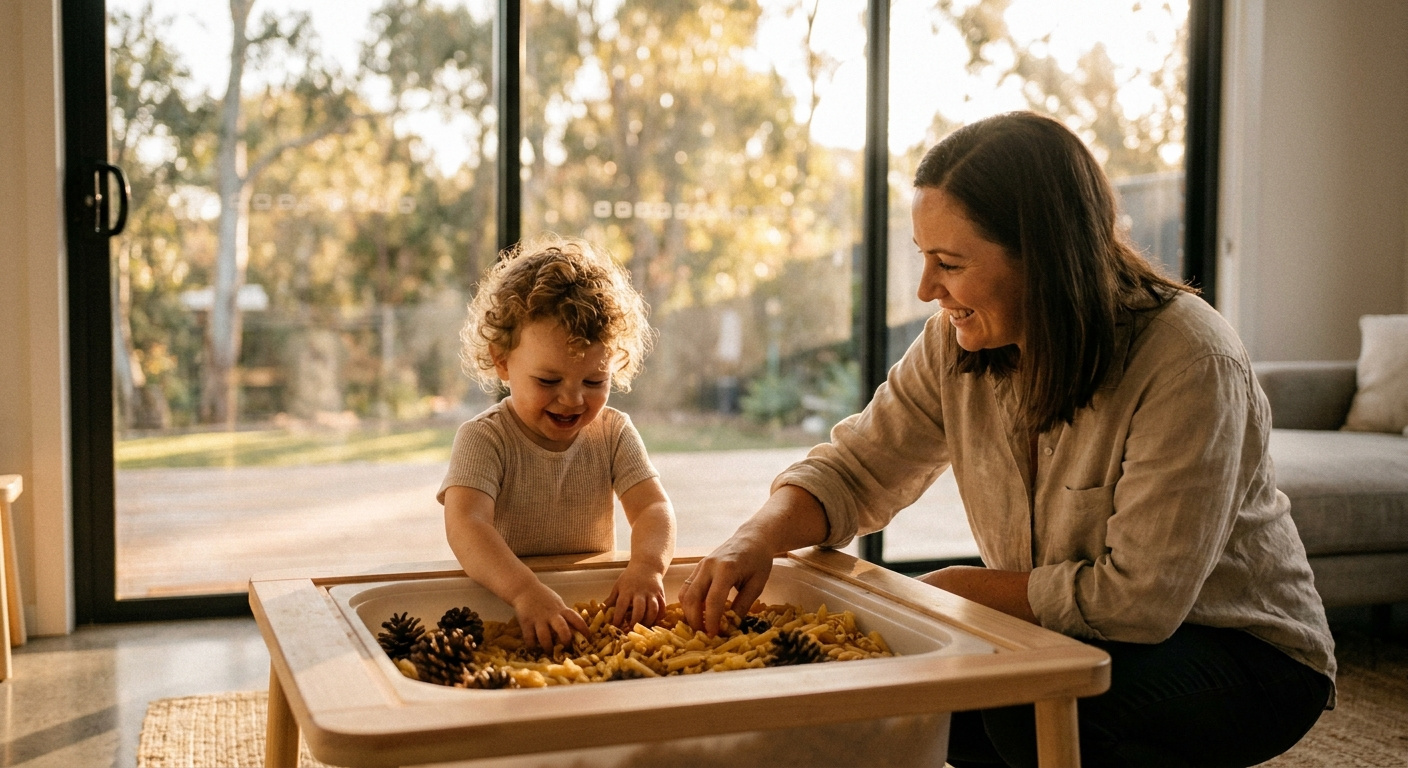

Three-year-old Emma squeals with delight as she plunges her hands into a tub of rainbow rice, tiny grains cascading between her fingers. Her mum Sarah watches from the kitchen doorway, marveling at twenty minutes of pure focus from her usually restless toddler.
This scene is playing out in homes across Australia as sensory play experiences unprecedented popularity. Early Childhood Australia reports a 400% increase in sensory play inquiries from parents and educators over the past two years. The Royal Children's Hospital Melbourne notes that paediatric occupational therapists are seeing more referrals specifically requesting sensory integration support than ever before.
But what's driving this surge? The answer lies in our growing understanding of how young brains develop. Sensory experiences literally build neural pathways, creating the foundation for everything from emotional regulation to academic success later on.
Australian researchers at Griffith University published findings in 2023 showing that toddlers who engaged in regular sensory play demonstrated 30% better self-regulation skills compared to peers in traditional play environments. These aren't just messy activities (though mess is definitely part of the fun). They're powerful learning tools.
The Raising Children Network emphasises that sensory play supports language development, problem-solving abilities, and social skills simultaneously. When your toddler describes the "squishy, cold" texture of playdough, they're building vocabulary while processing sensory information.
Creating your own sensory space doesn't require expensive equipment or Pinterest-perfect setups. Start with what you have. A simple treasure basket filled with safe household items works wonders. Think wooden spoons, fabric scraps, metal measuring cups, and natural sponges.
Water play remains the ultimate crowd-pleaser. Fill a shallow tub with warm water and add measuring cups, funnels, and floating toys. Position towels strategically and embrace the inevitable splashing. Your toddler is learning about cause and effect, volume, and physics through pure experimentation.
Texture bins transform ordinary afternoons into sensory adventures. Rice, pasta, dried beans, or shredded paper create different tactile experiences. Hide small toys inside for added excitement. Supervise closely, especially with younger toddlers who might still mouth everything.
Kinetic sand offers contained messiness that appeals to both kids and cleanup-conscious parents. The RSPCA Australia confirms that regular sand is safe for supervised play, though commercial alternatives provide consistent texture year-round.
Playdough deserves its own mention here. Making homemade versions adds cooking skills to the sensory experience. The basic recipe uses flour, salt, water, and oil. Add food colouring or essential oils for extra sensory input.
Don't overlook everyday activities as sensory opportunities. Cooking together provides multiple sensory experiences simultaneously. Feeling bread dough, smelling herbs, hearing sizzling sounds, and tasting ingredients engages all the senses while building practical life skills.
Nature provides the richest sensory experiences of all. Collect leaves, pinecones, shells, and smooth stones for exploring different textures. Many Australian communities now have dedicated sensory gardens in local parks, according to Playgroup Australia.
Timing matters as much as materials. Most toddlers engage best with sensory activities when they're alert but not overstimulated. Mid-morning often works perfectly, after breakfast but before the pre-lunch energy dip.
Some children feel overwhelmed by intense sensory experiences. Watch for signs like pulling away, covering ears, or becoming upset. Offer gentler alternatives like soft fabric books or quiet music instead.
The beauty of sensory play lies in its simplicity. You're not teaching specific skills or following curriculum guidelines. You're providing rich experiences that let your toddler's natural curiosity lead the way.
Every handful of rice, every splash of water, every squeeze of playdough builds the neural connections that will serve them throughout life. That's worth getting a little messy for.