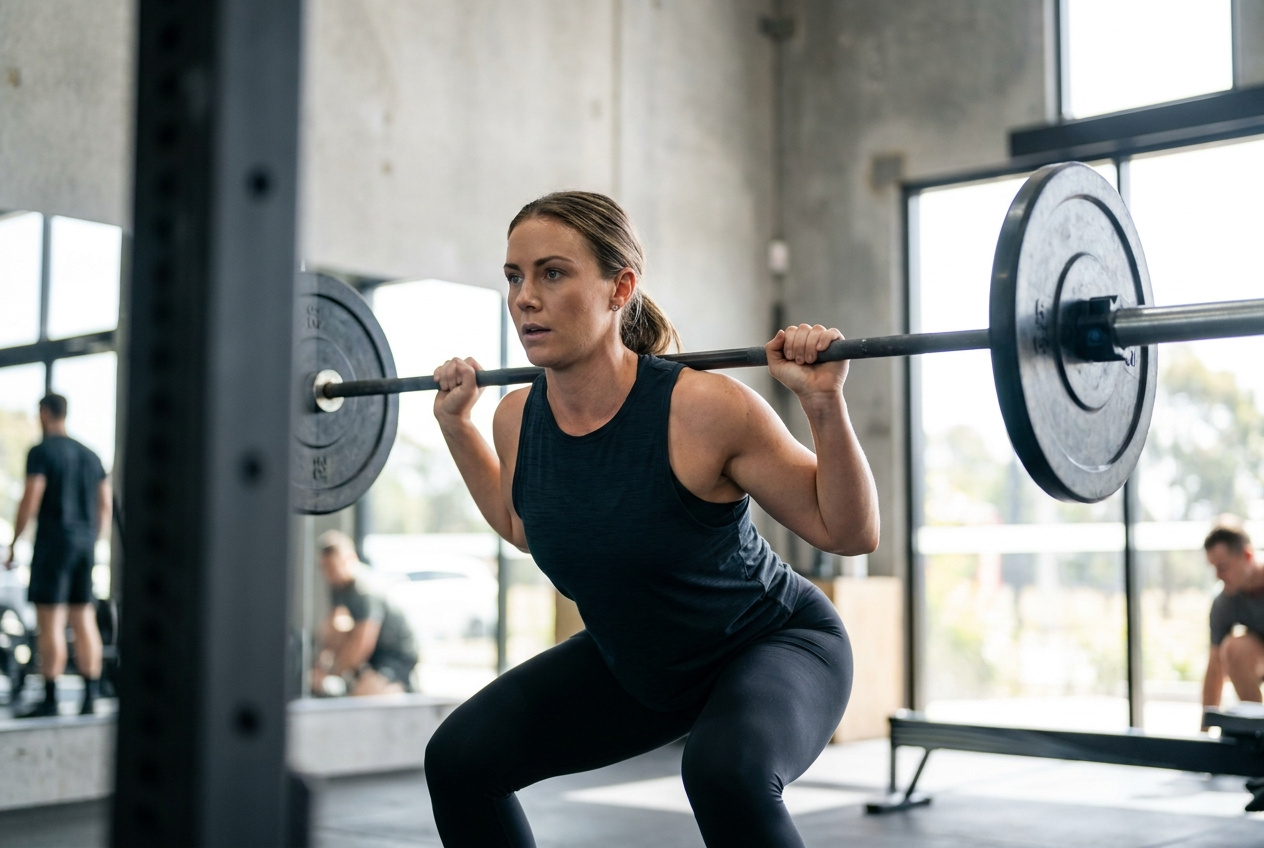
Sarah Chen drops her eighteen-month-old at daycare in Caulfield, then walks straight into her local gym. Three times a week, without fail. She's not chasing weight loss or fitting back into pre-pregnancy jeans. She's investing in her future self.
"I want to be able to lift my grandkids one day," she says, loading plates onto a barbell. "And I want my daughter to see that mums can be strong."
Sarah's onto something profound. Strength training isn't just exercise for mothers—it's insurance against the physical and mental challenges that come with raising children and ageing.
Consider the numbers. According to Osteoporosis Australia, one in two women over fifty will experience an osteoporotic fracture. But resistance training can increase bone mineral density by up to three percent annually, research from Griffith University demonstrated in 2019. Those gym sessions today could prevent hip fractures in thirty years.
The benefits start immediately, though. Exercise and Sports Science Australia guidelines recognise strength training as the most effective intervention for rebuilding core stability after pregnancy. Your pelvic floor, abdominal muscles, and deep spinal stabilisers—all compromised during pregnancy and birth—respond better to progressive resistance than any other form of exercise.
But here's what the research doesn't capture: the psychological transformation. When you can deadlift your body weight, carrying a sleeping toddler upstairs feels effortless. When you've pushed through the discomfort of adding five more kilos to your squat, dealing with a tantrum at Woolworths seems manageable.
A 2022 study published in the Journal of Clinical Medicine found that mothers who engaged in regular strength training reported significantly lower rates of postnatal anxiety and depression compared to those doing cardio alone. The Black Dog Institute has long advocated for resistance training as a complement to traditional mental health treatments.
What makes strength training uniquely valuable for mums is its efficiency. You don't need hour-long sessions or expensive equipment. Twenty to thirty minutes, twice a week, focusing on compound movements like squats, deadlifts, and push-ups will deliver measurable results.
The Australian Physical Activity Guidelines recommend at least two strength sessions weekly for all adults. Yet data from the Australian Institute of Health and Welfare shows only eighteen percent of women meet these guidelines. Mothers are even less likely to prioritise resistance training, often viewing it as intimidating or time-consuming.
This perception needs to shift. Strength training is the closest thing we have to a magic bullet for maternal health. It improves sleep quality (crucial when you're already sleep-deprived), increases metabolic rate, reduces chronic pain, and builds the physical resilience needed for the marathon of motherhood.
The mental health benefits compound over time. Each personal record—whether that's your first proper push-up or adding another plate to your deadlift—proves to your brain that you're capable of hard things. That confidence transfers to every aspect of parenting and life.
Start simple. Bodyweight squats while your baby has tummy time. Push-ups against the kitchen bench while dinner cooks. Resistance bands during naptime. The Royal Australian College of General Practitioners emphasises that any strength training is better than none.
Your future self will thank you. Your children will benefit from having a mother who models strength, resilience, and self-care.
Because here's the truth: taking care of everyone else starts with taking care of yourself.