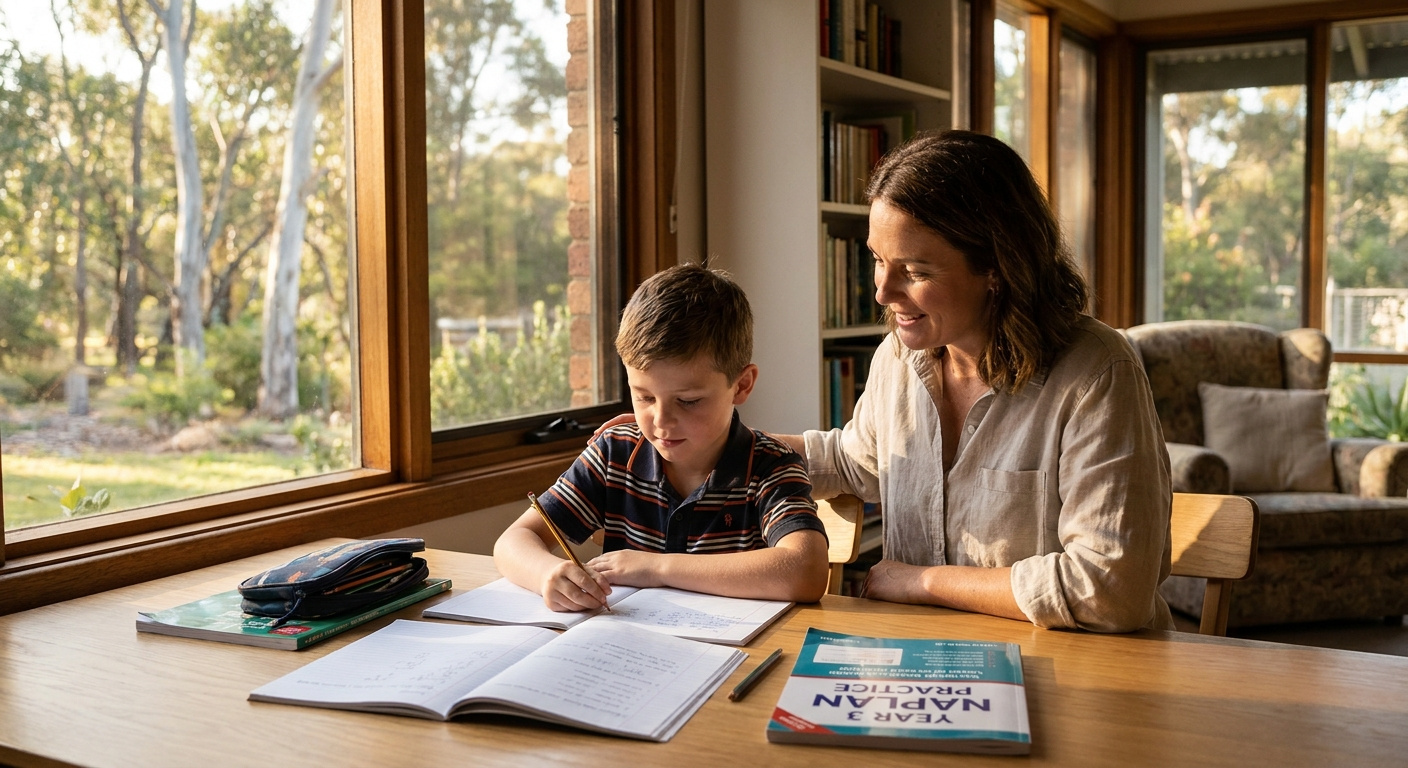

Let's cut through the noise, mums. Year 3 NAPLAN doesn't need to be the family crisis that some schools and tutoring centres would have you believe it is.
After covering education policy across Australia for over a decade, I've seen too many families turn themselves inside out preparing for what is essentially a snapshot of your child's learning at one point in time. Here's what actually works.
Start with the basics your child already knows. NAPLAN tests literacy and numeracy skills they've been learning since Kindy. Focus on reading together daily, discussing stories, and practising basic maths through everyday activities like cooking or shopping.
The biggest mistake I see parents make is cramming. Your eight-year-old doesn't need intensive test prep sessions that would make a Year 12 student weep. Instead, incorporate NAPLAN-style activities naturally into your routine.
For reading comprehension, choose books slightly above your child's current level and ask simple questions about characters, settings, and what might happen next. The State Library of Victoria and other state libraries offer excellent digital resources that mirror NAPLAN question formats without the pressure.
Writing skills develop through practice, not panic. Encourage your child to write shopping lists, thank you notes to grandparents, or short stories about their weekend. The key is making writing feel purposeful rather than like homework.
Numeracy preparation should focus on real-world problem solving. Calculate change at the shops, measure ingredients for baking, or work out how many sleeps until the school holidays. These practical applications stick better than worksheet drilling.
Address test anxiety head-on. Explain that NAPLAN helps teachers understand how to support learning, not judge your child's worth. Practice sitting still and concentrating for short periods, gradually building up stamina.
Here's what the education bureaucrats won't tell you: NAPLAN results don't determine your child's future success. They're one data point among many that teachers use to plan lessons.
Avoid the tutoring trap unless your child has specific learning gaps. Most Year 3 students who attend quality schools and have supportive home environments will perform adequately on NAPLAN with minimal additional preparation.
Focus on sleep, nutrition, and emotional wellbeing in the weeks leading up to the tests. A well-rested, confident child will outperform an anxious, over-tutored one every time.
Remember that NAPLAN measures what your child knows on those specific test days. It doesn't measure creativity, kindness, determination, or the countless other qualities that make your child special.
The Australian Curriculum sets clear expectations for Year 3 learning. If your child is meeting classroom expectations, they're ready for NAPLAN. Trust the process and trust your child.